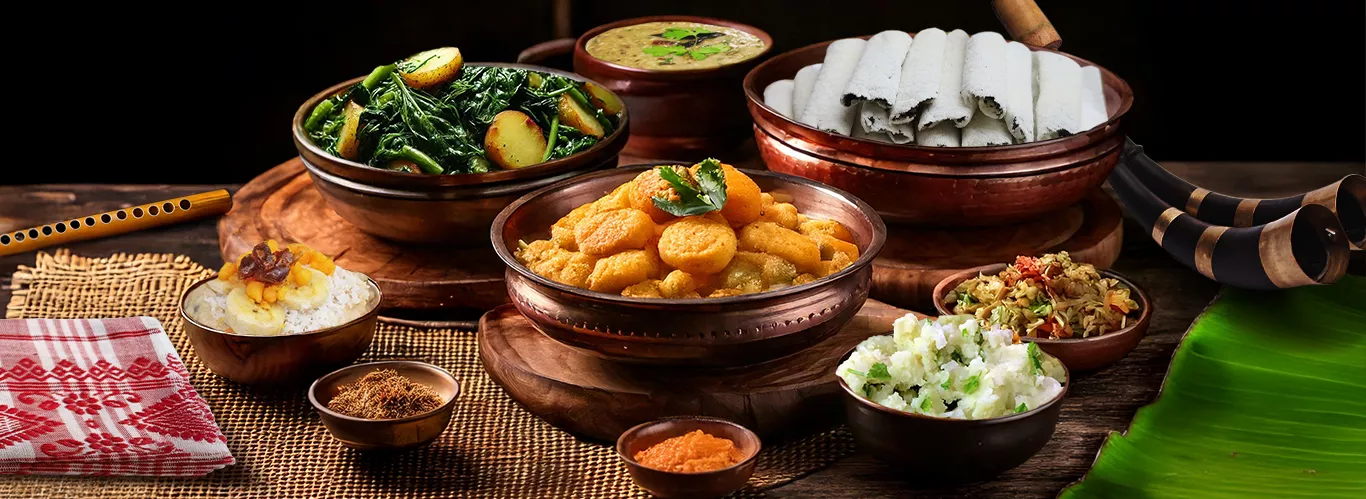
Assamese cuisine is known for its simplicity, freshness, and deep connection to local ingredients. While many people associate the region with fish and meat preparations, a traditional vegetarian Assamese thali showcases an equally rich culinary heritage. Built around seasonal vegetables, lentils, herbs, and thoughtfully used spices, these meals offer a wholesome and satisfying dining experience.
What is an Assamese Thali?
An Assamese thali is a traditional meal that features rice served with a variety of side dishes, including vegetables, lentils, greens, tangy curries, and condiments. A vegetarian Assamese thali highlights the region's preference for fresh, seasonal produce and simple cooking techniques. It reflects Assamese food traditions by focusing on balance, nutrition, and natural flavours rather than heavy spice combinations. Today, it remains an important part of Assamese cuisine and everyday family meals.
Key Takeaways:
- A wholesome meal centred around rice and side dishes.
- Highlights fresh, seasonal and local ingredients.
- Celebrates balance, simplicity and nutrition.
What Makes Assamese Thali Unique?
A traditional Assamese thali reflects the region's agricultural heritage and seasonal cooking practices. Ingredients are often sourced locally and cooked in ways that preserve their natural flavours.
One of the defining features of Assamese cuisine is its restrained use of spices. Rather than overwhelming the palate, spices are used to enhance vegetables, lentils, and herbs.
Rice plays a central role in nearly every meal and serves as the foundation around which the rest of the dishes are arranged. The combination of textures, flavours, and cooking methods creates a balanced dining experience.
Meals are often enjoyed together with family members, highlighting the cultural importance of communal dining and hospitality.
Key Takeaways:
- Uses minimal spices to enhance natural flavours.
- Built around seasonal produce and local cooking traditions.
- Offers a balanced mix of textures and tastes.
6 Vegetarian Assamese Thali Dishes You Must Try
Assamese Malpua
This sweet delicacy is especially devoured in Assamese houses during Bihu, their harvest festival. It is typically had for breakfast by the locals. You will need all-purpose flour, rice flour, jaggery, salt, cardamom and oil to whip out this Assamese malpua recipe.
A batter similar to that of a dosa batter is made by mixing all-purpose flour, rice flour, melted jaggery, salt and cardamom. Then a ladle of this batter is poured in oil, and the malpua is deep-fried until it turns a gorgeous golden brown hue.
Doi Chira
Doi Chira is another popular light meal that is devoured by the locals, typically early in the morning. It is nothing but beaten rice, curd and jaggery. This simple dish is a comfort food for Assamese people, and it instantly induces a sense of nostalgia amongst them. It is a sweet and creamy cuisine that is great for the winter months.
Til Pitha
Assamese rice pitha, or til pitha, is again a breakfast item that is enjoyed with morning chai. The main ingredients used to make this dish are rice, jaggery and sesame, and til pithas look like spring rolls. The outside wrapper is made from glutinous local rice, and the sweet filling inside is made using sesame and jaggery. Assamese rice pitha is a popular sweet dish that is enjoyed by the locals during the Bihu festival.
Aloo Pitika
We all know that sometimes simple dishes are the ones that warm your soul and make you feel satiated and content. Aloo Pitika is the epitome of comfort food. It is a mashed potato dish that is a staple in every Assamese household. In this dish, mashed potato is seasoned with mustard oil, green chillies, raw onions, coriander and a pinch of salt.
It is often served as a side dish in Assamese thali. You can also enjoy it with a bowl of rice or rotis. If you want to prepare this dish just like how the locals do it, then mash the potatoes with your hands instead of using a masher.
Khar
Khar is an alkaline extract that you get from dried banana peel. It is the signature Assamese ingredient that is used in many Assamese foods. Khar has a bitter, salty and earthy flavour to it. It is often used with raw papaya, spinach, bottle gourd, etc. You can enjoy khar with rice, vegetables and fish.
Xaak Aru Bhaji
This local cuisine is made using plenty of leafy vegetables and herbs. It is then seasoned with ginger, garlic, lemon, onion, cinnamon and other local spices. It is often served as a side dish alongside a bowl of steamed rice. Typically, a stir fry of potato is mixed with this vegetable to further enhance the taste and flavour of this unique dish.
Key Takeaways:
- Features comforting staples, festive sweets and signature delicacies.
- Showcases Assam's rich vegetarian food traditions.
- Every dish highlights simple ingredients and authentic flavours.
How a Traditional Vegetarian Assamese Thali Is Served
A traditional Assamese thali follows a thoughtful sequence. Meals generally begin with khar, followed by vegetable preparations, greens, lentils, and tangy dishes such as tenga.
Rice remains at the centre of the meal and is paired with each preparation. Accompaniments may include pickles, chutneys, or seasonal salads.
The exact composition often changes with the seasons, reflecting the availability of fresh local produce.
Key Takeaways:
- Served in a traditional sequence for balanced flavours.
- Rice is paired with every preparation.
- Seasonal sides complete the meal.
Tips for Recreating Assamese Thali at Home
If you want to prepare an authentic Assamese thali in your own kitchen, keep these tips in mind:
- Choose fresh, seasonal vegetables whenever possible
- Focus on simple cooking techniques
- Avoid overusing spices
- Let natural flavours remain the highlight
- Use mustard oil where appropriate for authenticity
- Balance earthy, tangy, and savoury elements across dishes
A common mistake is trying to make Assamese food overly spicy. Traditional preparations rely on balance rather than intensity.
Key Takeaways:
- Use fresh ingredients and mustard oil.
- Keep spices light and flavours balanced.
- Let natural ingredients shine.
Conclusion
A vegetarian Assamese thali offers a wonderful introduction to the diversity of Assamese cuisine. From the distinctive flavours of khar to the comforting simplicity of aloo pitika and the refreshing tang of vegetable tenga, every dish tells a story of tradition, seasonality, and local ingredients.
Exploring these Assamese dishes is a great way to discover the richness of traditional Assamese food and appreciate one of India's most distinctive regional cuisines. With thoughtfully selected ingredients and trusted products from Sunrise Pure Spices, bringing these authentic flavours to your table becomes easier than ever.
Frequently Asked Questions
What is included in a traditional Assamese thali?
A traditional Assamese thali typically includes rice, dal, vegetable dishes, leafy greens, khar, tangy curries, pickles, and seasonal accompaniments.
What are the most popular vegetarian Assamese dishes?
Some of the most popular vegetarian Assamese dishes include Khar, Aloo Pitika, Bilahi Boror Tenga, Xaak Bhaji, Vegetable Tenga, and traditional Assamese dal preparations.
What makes Assamese cuisine unique?
Assamese cuisine stands out for its seasonal ingredients, simple cooking methods, distinctive dishes such as Khar, and a strong emphasis on balance and freshness.
Can I make Assamese thali dishes at home?
Yes. Most Assamese dishes use easily available vegetables, lentils, and spices. With fresh ingredients and quality seasonings, many recipes can be recreated successfully at home.
What is the traditional practice of serving food in Assam?
In Assam, food is traditionally served and sometimes cooked using banana leaves. This age-old practice is common during festivals, social gatherings, and everyday meals. Banana leaves are also used to wrap ingredients such as small fish and vegetables before roasting or cooking, adding a subtle natural flavour to the dish.