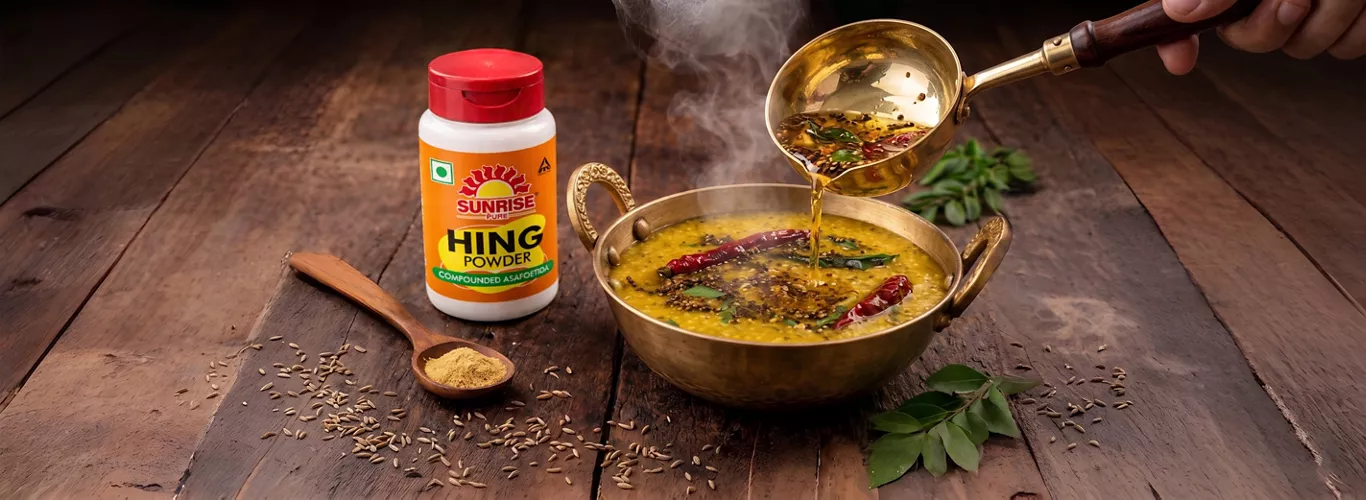
One spice that adds a unique umami flavour to food and makes it easier on the stomach at the same time? Hing it is. Adding just a pinch of hing can help spices come together smoothly while enhancing the overall flavour. It is commonly used in Indian cuisine to add depth and layers to curries, dals, and vegetable dishes. Let's explore how hing benefits can go beyond just a flavour addition.
What Is Hing and Why Is It Used in Indian Cooking
Hing comes from the resin extracted from the roots of the asafoetida plant, native to parts of Iran and Afghanistan. In its raw form, the resin is too strong to use directly in home kitchens.
That is why hing is commonly sold as a powdered compound, mixed with edible flour or gum. Asafoetida powder benefits home cooks because it is easier to measure and use than raw resin. While raw hing smells sharp and pungent, its flavour mellows beautifully once cooked.
Across India, asafoetida is used in tempering dals, flavouring kadhi, and enhancing vegetable dishes. It is also used in pickles and chutneys in very small amounts. Its role is to support flavour rather than dominating it.
When hing is used in cooking, it brings precision to flavours. However, using too much hing can ruin a dish. Its strength means restraint is essential. A pinch is enough to lift the entire preparation.
Common Hing Uses in Everyday Cooking
Hing powder is used in many familiar Indian dishes, often without being noticed, yet it plays a key role in building flavour.
Dal tadka: Added to hot ghee along with cumin or mustard seeds to form the flavour base.
Kadhi: A small pinch helps balance the sourness of curd and besan.
Aloo and mixed vegetable sabzis: Hing added at the start of cooking enhances overall depth.
Pickles and chutneys: Used sparingly to add warmth and complexity.
South Indian dishes: Rasam and sambar rely on hing for their signature aroma.
Hing is used most commonly during the tempering stage of cooking. It is added to hot ghee or oil to build a strong flavour base. This step quietly shapes the final taste of the dish.
Asafoetida (Hing) Health Benefits
Asafoetida benefits go beyond flavour, making food easier to enjoy and digest. It softens sharp spice notes and reduces the heaviness of certain ingredients. This is why it remains a staple in traditional kitchens.
1. Supports digestion
Asafoetida health benefits are traditionally linked to digestion and gut comfort. It is commonly added to dals, beans, and vegetables because it reduces bloating and heaviness, making meals easier on the stomach.
2. Helps reduce gas and discomfort
The health benefits of hing include reducing bloating and improving how the body handles lentils and legumes. This is why it is valued in home-style cooking.
3. Improves gut comfort
Hing is believed to stimulate digestive enzymes, which helps food break down better and prevents that sluggish feeling after meals.
4. Helps balance rich foods
In dishes cooked with ghee, curd, or besan, hing helps cut through richness and supports smoother digestion.
5. Traditionally used for stomach relief
In many households, hing has been used in small home remedies for mild stomach discomfort, cramps, or indigestion.
6. Naturally warming in nature
Hing has a warming effect on the body, which is why it is often used in winter cooking and in foods meant to feel comforting.
7. Useful in onion- and garlic-free diets
For Jain and Satvik diets, hing provides digestive support and depth of flavour without relying on onion or garlic.
8. Works best when used sparingly
Health benefits come from using hing in very small quantities. A pinch is enough; overuse can overwhelm both flavour and digestion.
The benefits of eating hing come from using it regularly in small quantities. It helps food feel lighter and more comfortable to digest.
Cooking Tips to Use Hing Correctly
Hing has a powerful pungent flavour; therefore, a pinch can be more than enough. It is important to use it the right way; it makes all the difference to the final dish.
Use sparingly: A tiny pinch is enough for a family-sized meal. Too much can overpower other flavours.
Always heat it first: Add hing to hot oil or ghee so its aroma blooms properly.
Pair it wisely: It works best with cumin, mustard seeds, and curry leaves during tempering.
Add it early: Hing should go in at the start of cooking, not sprinkled at the end.
Store it carefully: Keep hing in an airtight container, away from heat and moisture.
Conclusion
Hing may be used sparingly, but its role in Indian cooking is deeply important. It shapes flavour, supports balance, and makes everyday meals more enjoyable. From simple dal to festive kadhi, it works wonders. With Sunrise Spices Hing in your kitchen, even a small pinch can bring authenticity to your cooking, just the way Indian food is meant to be.
FAQs
What happens if too much hing is added to a dish?
Excess hing can make a dish bitter and overpowering. Once added, it is difficult to correct, which is why careful measuring and restraint are always recommended.
How is asafoetida powder different from raw hing?
Raw hing is a strong resin that is too pungent to use directly. Asafoetida powder is processed and mixed with edible flour or gum, making it easier to measure and suitable for home cooking.
How much hing should be used in cooking?
Only a tiny pinch is needed for a family-sized dish. Using too much hing can overpower other flavours and affect the taste of the dish.
What are the health benefits of eating hing in small amounts?
Hing is traditionally valued for aiding digestion and making food easier on the stomach. This is why it is commonly added to lentils, beans, and curd-based dishes.