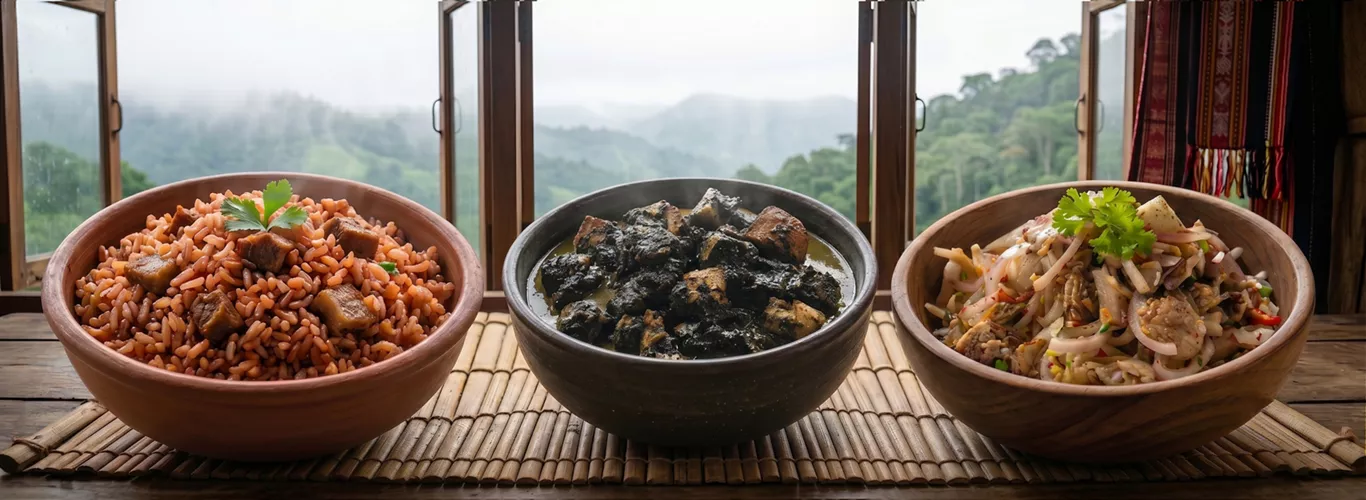
Nestled among Meghalaya's rolling hills and mist-covered landscapes, Khasi cuisine reflects a way of life shaped by community, tradition, and a deep respect for nature. The Khasi people have long relied on locally available ingredients, creating dishes that are hearty, nourishing, and full of character. For anyone looking to explore the diverse food traditions of Northeast India, Khasi cuisine offers an authentic introduction to the rich culinary heritage that makes Meghalaya's food culture so distinctive.
What is Meghalaya Cuisine?
Meghalaya cuisine refers to the traditional food practices of the Khasi, Garo, and Jaintia communities of Meghalaya. It is known for its use of locally sourced ingredients, smoked and fermented foods, rice-based meals, and minimally processed flavours. Unlike many other Indian regional cuisines, Meghalaya dishes rely more on ingredient quality and traditional cooking techniques than on heavy spice combinations.
Key Takeaways:
- Rooted in the food traditions of the Khasi, Garo, and Jaintia communities.
- Known for fresh local ingredients, smoked foods, fermented delicacies, and rice-based meals.
- Focuses on natural flavours and traditional cooking methods rather than heavy spice usage.
What Makes Meghalaya Cuisine Unique?
One of the defining features of Meghalaya cuisine is its close relationship with the land. Traditional recipes are built around ingredients that are locally grown, gathered, or raised within the community.
Khasi Culinary Traditions
Khasi food is known for hearty rice dishes, pork preparations, and the use of black sesame. Meals are often simple but deeply satisfying.
Garo Culinary Traditions
Garo food frequently incorporates smoked meats, dried fish, and fermented ingredients. The cuisine is known for its robust flavours and practical cooking methods.
Jaintia Culinary Traditions
Jaintia cuisine features a range of fermented foods and distinctive local ingredients. Traditional recipes often showcase preservation techniques developed over generations.
Across all three communities, seasonal eating remains central. Fresh produce, locally sourced meats, and traditional preservation methods help shape the region's food culture.
Food also plays an important role during festivals, family gatherings, and community celebrations, making meals a reflection of both heritage and identity.
Key Takeaways:
- Deeply connected to local landscapes, seasonal produce, and community traditions.
- Each tribal community contributes distinct ingredients, recipes, and cooking styles.
- Food serves as an important expression of cultural identity, festivals, and social gatherings.
Famous Foods of Meghalaya You Must Try
The best way to understand Meghalaya food is through its signature dishes, each reflecting local ingredients and tribal traditions.
No exploration of Meghalaya foods would be complete without tasting the iconic dishes that define Khasi kitchens. Each recipe is steeped in tradition and reflects the close bond the Khasis share with their land.
Jadoh
Think of Jadoh as the Khasi version of biryani, but with a unique twist. This dish combines rice and pork, cooked with turmeric and ginger for a richer flavour. It's the ultimate comfort food and a must-have during special occasions.
Dohneiiong
If you love pork and are looking for something indulgent, Dohneiiong is your answer. This black sesame pork curry is smoky, nutty, and incredibly satisfying. It pairs beautifully with a bowl of steaming rice, making it a hearty meal that warms both your stomach and your soul.
Tungrymbai
Vegetarian food lovers, rejoice! Tungrymbai is a unique dish made from fermented soybeans sauteed with onions, ginger, garlic, and a dash of mustard oil. The result is a tangy, earthy dish that's packed with flavour. It's best enjoyed with hot rice and a side of greens.
Pumaloi
This steamed rice cake is as simple as it gets, but don't underestimate its appeal. Pumaloi is a staple at Khasi households and is often paired with rich curries or stir-fried vegetables.
Nakham Bitchi
Venturing a bit into Garo cuisine, this is a light yet flavourful soup made from dried fish, ginger, and chillies. It's perfect for chilly evenings when you need something warm and comforting.
Key Takeaways:
- Signature dishes like Jadoh, Dohneiiong, and Tungrymbai showcase the region's rich culinary heritage.
- Traditional recipes highlight local ingredients such as pork, black sesame, fermented soybeans, and rice.
- Every dish offers a glimpse into the everyday food culture of Meghalaya's tribal communities.
Traditional Cooking Methods in Meghalaya
Traditional cooking techniques help preserve the authenticity of Meghalaya's culinary heritage.
Smoking
Smoking enhances flavour while naturally preserving meat and fish.
Boiling
Many dishes rely on boiling to retain the natural taste of ingredients.
Steaming
Steaming is commonly used for rice-based dishes such as Pumaloi.
Fermentation
Fermented foods contribute depth, nutrition, and unique flavours.
Slow Cooking
Slow cooking allows flavours to develop gradually and naturally.
Cooking with Bamboo
Bamboo is sometimes used as a cooking vessel, imparting subtle flavour and reflecting indigenous food traditions.
Key Takeaways:
- Smoking, fermentation, and slow cooking help preserve food and develop deeper flavours.
- Boiling and steaming retain the natural taste and nutritional value of ingredients.
- Indigenous techniques such as cooking with bamboo reflect centuries-old culinary traditions.
The Role of Spices in Meghalaya Cuisine
Although Meghalaya cuisine is not known for complex spice blends, seasonings still play an important role. Ginger, local chillies, black pepper, and aromatic herbs are used thoughtfully to complement rather than dominate the ingredients.
The focus remains on balance and restraint. Instead of masking flavours, spices help enhance the character of meats, vegetables, and fermented ingredients.
For home cooks looking to recreate regional dishes, using fresh, high-quality spices can make a noticeable difference. Carefully sourced ingredients help bring authentic flavours closer to traditional preparations.
Key Takeaways:
- Spices are used sparingly to enhance rather than overpower natural flavours.
- Ginger, local chillies, black pepper, and herbs are among the most commonly used seasonings.
- Fresh, high-quality spices can help recreate authentic Meghalaya flavours at home.
Conclusion
The diversity of Meghalaya traditional food reflects the cultural richness of the Khasi, Garo, and Jaintia communities. From comforting rice dishes and smoked meats to fermented delicacies and bamboo shoot preparations, every recipe tells a story of tradition, community, and local ingredients.
As interest in regional Indian cuisines continues to grow, preserving and celebrating these culinary traditions becomes increasingly important. Exploring Meghalaya's cuisine offers a deeper appreciation of India's incredible culinary heritage. With quality ingredients and thoughtfully selected spices from Sunrise Pure Spices, recreating these regional flavours at home becomes even more rewarding.
FAQs
What is the most famous food of Meghalaya?
Jadoh is often considered the most famous food of Meghalaya. This traditional Khasi rice and pork dish is widely enjoyed across the state and is known for its comforting flavour, simple ingredients, and strong cultural significance in community gatherings and celebrations.
What is Meghalaya cuisine known for?
Meghalaya cuisine is known for fresh local ingredients, smoked meats, fermented foods, rice-based dishes, and simple cooking methods. Traditional recipes focus on preserving the natural flavour of ingredients rather than relying on heavy spice blends or rich gravies.
Is Meghalaya food spicy?
Meghalaya food is generally moderately spicy rather than intensely hot. Local chillies are commonly used, but they are typically balanced with fresh ingredients, smoked meats, rice, and fermented foods to create well-rounded flavours.
What ingredients are commonly used in Meghalaya traditional food?
Common ingredients include rice, pork, bamboo shoots, black sesame, ginger, local herbs, fermented soybeans, dried fish, and chillies. These ingredients form the foundation of many traditional dishes across Khasi, Garo, and Jaintia communities.
Which tribal communities influence Meghalaya cuisine?
The Khasi, Garo, and Jaintia communities are the primary influences on Meghalaya cuisine. Each group contributes unique cooking methods, ingredients, and recipes that together create the diverse food culture of the state.
What makes Meghalaya food unique?
Meghalaya food is unique because of its strong connection to indigenous traditions, seasonal ingredients, fermentation practices, and simple cooking techniques. The cuisine prioritises natural flavours, locally sourced produce, and community-based food traditions that have been preserved for generations.