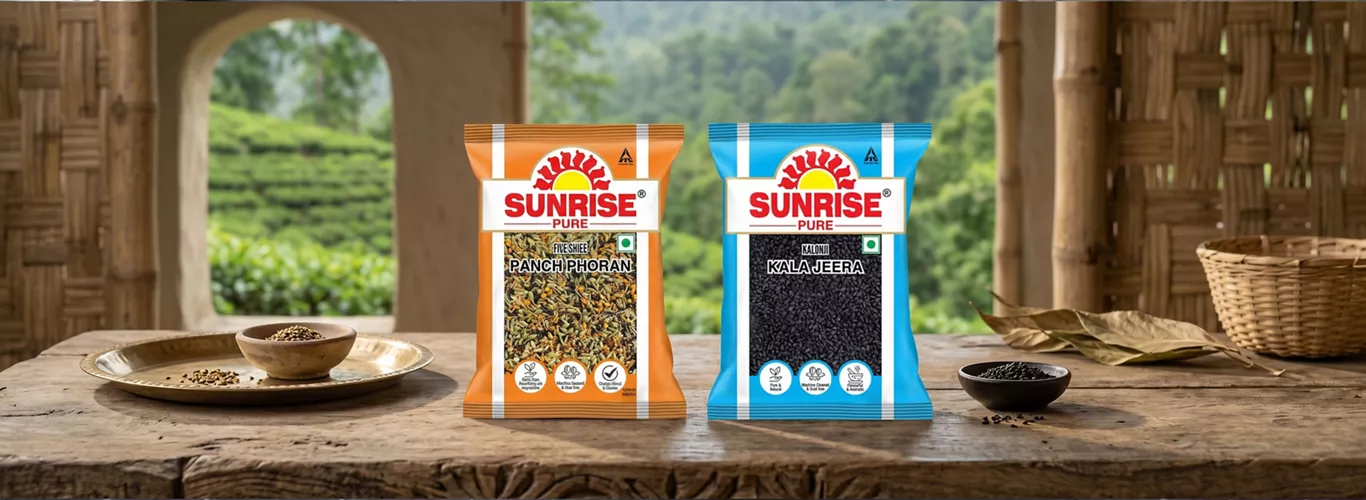
Think of Assam, and you are immediately reminded of dense forests, breathtaking valleys, and beautiful rivers. The freshness and fragrance translate into the cuisine of Assam as well. Core Assamese spices include panch phoran, mustard seeds, black sesame, ginger, garlic, pipli and regional herbs. The flavour profile stands apart in Northeast India because it balances heat, sourness, smoke, and earthiness with minimal oil. Therefore, Assam's traditional food is gentle yet expressive, with earthy, citrussy and smoky notes running through everyday cooking.
What Makes Assamese Spice Use Unique?
Assam food has its magic, and a lot of it comes from the way spices are used. The flavours are gentle, creating dishes that feel fresh, earthy, and completely in tune with the region.
1. A Minimalist and Fresh Approach
Many Indian cuisines build flavour through layers of spice powders and complex masalas, but Assamese cooking follows a gentler philosophy. Spices in Assam are added with a light hand to enhance the natural taste of the main ingredients rather than dominate them.
2. Strong Dependence on Local Produce
Assam’s special food dishes reflect the land they come from. The spices and herbs used are closely tied to the region’s seasons and soil. Fresh greens, wild herbs, and local citrus varieties are not just additions. They play a defining role in shaping the dishes.
3. Use of Fermentation for Flavour and Preservation
Fermentation is an important tradition in Assamese homes. Ingredients like fermented bamboo shoots bring a tangy and savoury depth that acts almost like natural seasoning. This creates rich layers of flavour without relying on heavy spice blends.
4. Focus on Balance Rather Than Intense Heat
Assam spices never overwhelm the plate. Instead, the flavours stay calm and balanced. Ginger and mustard give a mild warmth, citrus brightens things up, and green chillies and local herbs add freshness. Together, they create a flavour that lets each ingredient hold its own.
5. Influence of Culture and Geography
Assam’s food has grown with influences from nearby Southeast Asia. That is why techniques like steaming, fermenting, and using plenty of fresh herbs feel so natural here. Combined with the region’s own traditions and gentle approach to spices, they shape a cuisine with a personality you instantly recognise.
Essential Spices Used in Assam
Panch Phoran
A five-spice mix of fenugreek, fennel, mustard, cumin, and nigella, it is tempering gold in Assamese cuisine and adds mild sweetness, nuttiness, and a gentle bitter edge.
Black Sesame
Used in gravies and pastes, black sesame provides a deep, earthy flavour. It is especially important in duck and chicken preparations.
Bhut Jolokia
One of the hottest chilli peppers in the world, it is added whole or in small quantities to build aroma rather than overwhelming spice.
Fresh Ginger and Garlic
These are crucial in Assamese kitchens. They add warmth, depth, and a clean sharpness when used in curries and stews.
Indian Long Pepper (Pipli)
More fragrant than regular pepper, pipli brings a warm, slightly sweet spice note and is often used in slow-cooked dishes.
Manimuni and Local Herbs
These regional herbs have a citrussy, grassy aroma that brightens salads, chutneys, and light broths.
Mustard Seeds
They are used for tempering and in pickles. Their nutty bitterness adds body to simple vegetable dishes.
Black Cumin (Kala Jeera)
Black cumin has a smoky, earthy tone that adds richness to lentil and rice preparations. It’s less commonly known outside Northeast and Eastern India but holds an important place in Assamese spice cupboards.
Turmeric
Turmeric is widely used in Assamese cuisine for its warm colour, earthy taste, and subtle bitterness. Unlike heavier Indian styles, Assamese cooking uses turmeric sparingly to keep flavours clean and natural, especially in light fish curries, vegetable stews, and everyday dal.
Cooking Tips for Making Assamese Dishes
• Use whole spices for tempering instead of heavy masala powders.
• Keep the heat moderate so spices release aroma gently.
• Balance sourness with natural acids such as lemon or tomatoes.
• Use ginger and garlic paste made fresh rather than store-bought.
• Combine one earthy note with one bright note for balance.
• Avoid adding too many spices at once, as Assamese cuisine values simplicity.
Conclusion
Assamese cuisine is unique because it celebrates freshness, earthiness, and delicate flavours. Its spice culture stands apart from the rest of India by using minimal oil, natural sourness and carefully chosen whole spices. To recreate authentic Assamese cuisine at home, the quality of spices matters. Sunrise Pure Spices offers high-grade whole spices and clean aromatic ingredients that work perfectly with the light, fresh profile of Northeast Indian flavours. With Sunrise Spices in your kitchen, you can explore these flavours easily and enjoy the true essence of the region.
FAQS
1.What are the essential spices every Assamese kitchen keeps?
Common staples include panch phoran, black sesame, mustard seeds, turmeric, ginger, garlic, pipli, green chillies, manimuni and kala jeera.
2.Why does Assamese cuisine use so many whole spices instead of powdered blends?
Whole spices preserve aroma better and release flavour slowly, which suits Assam’s gentle cooking techniques like simmering and steaming. This approach allows each ingredient to stay expressive without being overshadowed by heavy masalas.
3.What is the famous spice of Assam?
Bhut Jolokia or Ghost Pepper, known for its intense heat, is one of the most famous spices of Assam.